Lots of engineering teams are already using Claude Code. It helps engineers move through technical problems faster, write cleaner code, and draft solid infrastructure-as-code. The productivity boost is obvious to anyone who’s actually used it.
What’s less obvious is what happens once one of those drafts needs to become real infrastructure. Claude Code works in a session. Your terminal, your prompts, your output. That’s great for the engineer, but the work stays there. Teammates don’t see it. There’s no approval step. No audit trail. No check against what’s actually deployed.
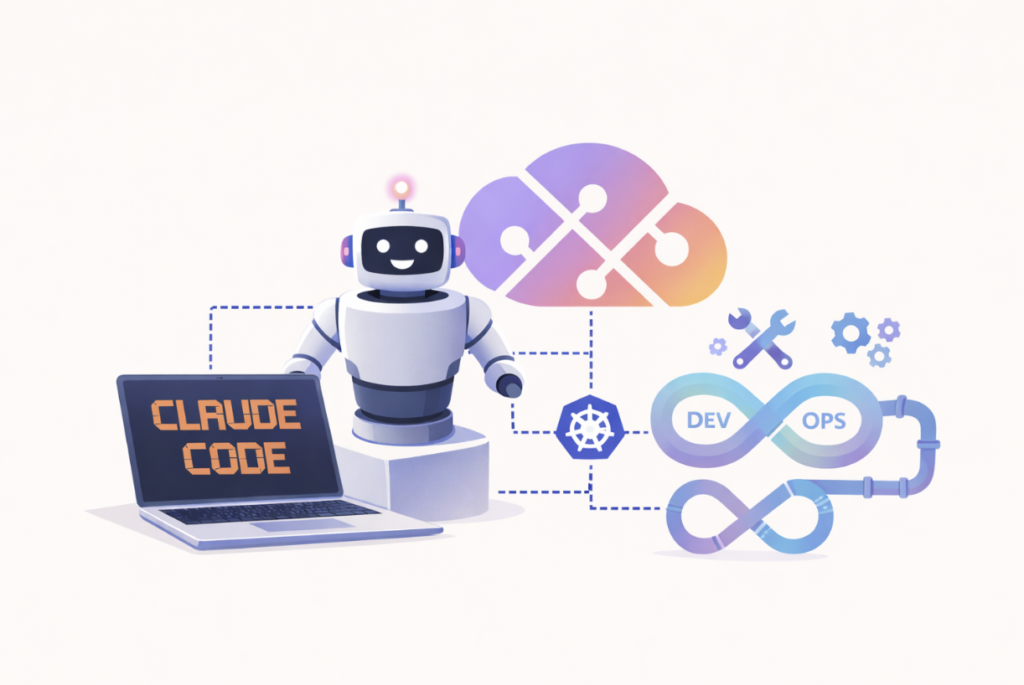
DuploCloud’s native Claude Code integration fixes that. When an engineer uses Claude Code inside DuploCloud, their session mirrors into the platform. The draft Terraform, the IAM change, the Kubernetes manifest, whatever Claude just generated, shows up in a shared workflow where the team can review it, approve it, and run it safely against the live environment.
The engineer keeps working the same way. The organization gets visibility and control it wouldn’t have otherwise. The rest of this piece walks through what that looks like in practice, where each tool plays its strongest role, and why it matters specifically for teams already using Claude Code in some form.
Key Takeaways
- Claude Code plus DuploCloud is one workflow with two layers, not two competing tools. Claude handles individual speed. DuploCloud handles team-level execution. The native integration is what connects them.
- Claude Code is strongest where engineers already use it: individual coding, iteration, and technical reasoning.
- DuploCloud adds what a single Claude session can’t give you: shared infrastructure context, approvals, governance, and a real audit trail.
- The integration itself is the unlock. Claude sessions mirror into DuploCloud, so fast output becomes production-ready infrastructure without engineers changing how they work.
- If your team is already using Claude Code on its own, there’s a specific, predictable gap this integration closes.
The Claude Code + DuploCloud Integration
DuploCloud includes a native Claude Code integration. Here’s what “mirroring local sessions” actually means for the engineer sitting at the terminal.
When someone on your team uses Claude Code inside DuploCloud’s AI Engineer, the session isn’t isolated to their laptop. The generated Terraform, the IAM changes, the manifest, all of it surfaces inside DuploCloud’s shared environment. From there, a few things start happening on their own.
The context gets applied automatically. DuploCloud already knows what’s deployed, how your environments are structured, and what security policies are in effect. Claude’s output is evaluated against that live state instead of a blank slate, which means issues surface before execution, not three days later in Slack.
Approvals are built into the path. Before anything runs, the change enters a review workflow. Teammates can see what was generated, check it against existing policies, and approve or adjust. Nobody finds out about the new MongoDB instance on Thursday when it accidentally breaks a staging dependency.
The audit trail writes itself. Every AI-generated change is logged: who requested it, what was generated, what was approved, and when it ran. If an auditor asks in six months, or if a postmortem demands the timeline, the answer is already captured.
And execution runs within predefined roles and permissions. The blast radius of any single mistake is bounded by the platform, not by hoping the engineer remembered to scope things correctly in the moment.
The engineer’s experience doesn’t change. The organization’s experience changes completely.
From Prompt to Production: A Real Workflow
Picture a Tuesday. It’s 2:47 PM, and Slack pings:
Hey, can you spin up a MongoDB-compatible environment for the recommendations feature? Need it in dev by tomorrow.
Standard ask. The challenge isn’t complexity. It’s moving fast without breaking something that’s already running.
Priya opens Claude Code. She describes what she needs, gets a Terraform draft back, asks a few follow-up questions about IAM, and refines the output. Thirty minutes later, she has something that looks right.
But now what?
Without the integration, the code lives in her terminal session. Her teammates don’t know it exists. There’s no shared record of what she’s building, no approval step before it touches staging, and no guarantee the IAM policy matches what the security team signed off on last quarter. When she runs it, she’s working from memory about what’s already deployed and hoping nothing drifts.
Here’s how the same Tuesday goes when Claude Code is integrated with DuploCloud:
Priya generates the Terraform draft with Claude the same way she always would. Same tool, same speed, same muscle memory. The draft then surfaces in DuploCloud’s AI Engineer as a pending change, already evaluated against the live environment state.
DuploCloud flags something. The IAM policy in Claude’s draft is more permissive than the team’s approved baseline for dev environments. That’s not something Claude could have known from the session alone, because Claude doesn’t see the policy repo.
Priya adjusts the policy inline. The change enters a lightweight approval workflow. Her team lead approves it in two clicks. DuploCloud executes the change within the correct environment boundaries.
The whole sequence (draft, review, adjustment, approval, execution) gets logged automatically.
Same engineer. Same AI tool. Same speed. Plus the governance layer that makes it safe to ship on a Tuesday afternoon without holding your breath.
Already Using Claude Code Internally? Here’s What’s Still Missing
This is the most common conversation we have with engineering leaders: “We’re already building infrastructure workflows with Claude Code. Why do we need DuploCloud on top of it?”
Fair question. Here’s what teams typically run into once they try to scale Claude Code past a handful of engineers.
Claude operates in sessions. It doesn’t know what’s deployed, what changed last week, or what patterns your team has already approved. You can paste that context into every prompt, but nobody actually does, and at team scale the gaps compound fast.
There’s no approval layer by default. Fast AI output moving directly to execution is a compliance problem waiting to happen. Most regulated industries, and most growth-stage companies, genuinely cannot ship infrastructure that way no matter how good the output looks.
There’s no automatic audit trail. When something breaks at 3 AM, “Priya generated it with Claude and ran it” is not a useful incident record. DuploCloud logs the full chain: what was prompted, what was generated, what was approved, and what actually ran against which environment.
Handoffs are fragile. When infrastructure work lives in someone’s local session, it disappears when they’re out sick, on vacation, or off the team entirely. Institutional knowledge shouldn’t live in a terminal history nobody else can access.
And work gets duplicated. Without shared visibility, engineers rebuild the same infrastructure patterns from scratch because they can’t see that someone already generated and approved the same thing three months ago.
DuploCloud isn’t asking your team to stop using Claude Code. It’s making Claude Code usable at the team level instead of only at the individual level. That’s a different problem than “which AI coding tool should we use,” and it’s the one most teams actually need solved.
What Claude Code Does Well
Claude Code is genuinely strong for individual engineering work. Whether you’re writing a Terraform module, drafting a Kubernetes manifest, or debugging a pipeline that keeps failing for unclear reasons, Claude helps you think faster and produce better output.
It’s especially useful for:
- Rapid iteration and experimentation. Drafting options, comparing approaches, refining logic until something actually works.
- Code generation and review. Writing scripts, reviewing infrastructure-as-code, catching issues before they hit PR review.
- Technical reasoning. Working through tradeoffs, explaining confusing errors, proposing concrete next steps.
- Compressing individual work. Tasks that used to take hours often land in minutes.
Teams should absolutely keep using Claude Code for these things. The speed is real, and the quality is real.
The catch is what Claude isn’t designed for. It operates in a session-based environment. It doesn’t inherently know your infrastructure state, your policies, or your team’s past decisions. That limitation matters the moment work has to move beyond one engineer, which is exactly what the integration is built to solve.
Single-Player Speed, Multiplayer Execution
One way to frame the difference: Claude Code is a single-player experience. One engineer, one session, a fast feedback loop between person and model.
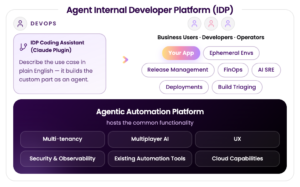
DuploCloud is a multiplayer platform. Work happens in shared environments with approvals, notifications, audit trails, and team-wide visibility.
These aren’t competing models. They’re complementary layers of the same workflow, and the integration is what connects them.
Claude Code Standalone vs. Claude Code + DuploCloud
Both approaches use Claude Code. The difference is what happens after the code is generated.
| Area | Claude Code (Standalone) | Claude Code + DuploCloud (Integrated) |
|---|---|---|
| Best use | Individual coding and reasoning | Individual speed connected to team execution |
| Strength | Fast iteration and technical assistance | Contextual execution with shared visibility |
| Typical user | Individual engineer | Engineering and DevOps teams |
| Collaboration | Centered on the user’s session | Built for shared visibility and approvals |
| Infrastructure context | Based on what the engineer provides in the prompt | Built on live environment state |
| Governance | Depends on processes applied after the fact | Built into the workflow, before execution |
| Audit trail | Requires manual documentation | Automatic, end to end |
The Real Productivity Opportunity
For most engineering teams at this point, the question isn’t whether to use Claude Code. It’s already part of the workflow.
The real question is whether the work Claude produces actually:
- Matches what’s already deployed
- Follows the security and compliance standards the team has agreed on
- Stays visible to the rest of the team
- Becomes reusable instead of getting rebuilt from scratch next quarter
Claude Code helps the individual engineer move faster. DuploCloud makes sure that work gets executed with context, control, and consistency. The integration between them is what closes the gap between the two.
Teams getting real leverage out of AI-assisted DevOps aren’t picking between speed and governance. They’re running workflows that support both, and that combination is what actually ships.
DuploCloud’s AI DevOps platform layers on top of your existing tools with no data migration and no rip-and-replace. See a demo to understand how it fits into your current stack.