For years, FedRAMP (Federal Risk and Authorization Management Program) has been the gateway to doing business with the U.S. federal government.
FedRAMP also represents one of the highest security and compliance standards a company could meet in America, making it challenging to meet the relevant standards.
As a result, FedRAMP is one of the misunderstood and operationally heavy compliance frameworks in the cloud. Now, with the introduction of FedRAMP 20x, FedRAMP is evolving, and we’re seeing the beginning of a shift, not just in how FedRAMP is executed but in how organizations should think about compliance altogether.
What is FedRAMP and Why Does It Exist?
FedRAMP (Federal Risk and Authorization Management Program) is a standardized framework that ensures cloud services used by federal agencies meet strict security requirements.
FedRAMP establishes:
- A common set of security controls.
- A standardized assessment and authorization process.
- Continuous monitoring requirements.
The goal is simple: enable government agencies to adopt cloud services securely and consistently.
However, until now, achieving that goal has been difficult for cloud providers, tech companies, partners, government agencies, and everyone involved, or who has ever used FedRAMP.
The Reality: FedRAMP Has Been Slow, Expensive, and Complex
Anyone who has gone through a FedRAMP authorization knows the reality. FedRAMP takes:
- Millions of dollars in upfront investment
- Heavy reliance on third-party assessors (3PAOs)
- Extensive documentation and manual evidence collection
- Continuous monitoring processes that are anything but continuous
In theory, FedRAMP is about standardization, and compliance with government security standards. But in practice, it has often led to fragmentation, duplication, and delays. This has created a major bottleneck; not just for companies trying to sell to the federal government, but for the government itself, trying to adopt modern technology, like SaaS, IaaS, PaaS, and AI.
Why FedRAMP 20x Exists
The move to FedRAMP 20x acknowledges that the current model is inefficient and does not scale. FedRAMP 20x is focused on modernizing FedRAMP.
It’s long since been acknowledged that FedRAMP needs to better align with how cloud systems are built and operated in an ever-evolving tech landscape. This is a crucial step towards making that happen.
At a high level, FedRAMP 20x aims to:
- Reduce time to authorization, and the development costs that companies have to spend to achieve this.
- Shift from documentation-heavy processes to automation-driven validation.
- Emphasize real-time security posture over point-in-time audits.
- Leverage modern cloud-native architectures and controls.
This is a fundamental shift: from proving compliance once and having a yearly assessment, to continuously demonstrating compliance.
The Core Gap FedRAMP 20x Is Addressing
The biggest gap with the current FedRAMP standards is that they measure whether a company is compliant at a specific moment in time, not whether they are remaining secure.
This gap is demonstrated in multiple ways:
- Controls are validated through static documentation rather than live systems.
- Evidence is collected manually instead of being generated automatically.
- Security posture drifts between audit cycles.
- Teams prepare for audits instead of operating securely by default.
FedRAMP 20x is designed to close this gap by aligning compliance with how modern infrastructure actually behaves: dynamic, automated, and continuously changing. This is also something that DuploCloud enables by embedding security and compliance directly into the infrastructure layer.
With DuploClouds pre-built compliance agent, teams can continuously monitor, detect drift, and remediate issues in real time. Making our systems the perfect partner for any company looking to gain or retain FedRAMP authorization.
FedRAMP Rev. 5 vs. FedRAMP 20x: What’s Changing
FedRAMP Rev. 5 (based on NIST SP 800-53 Rev. 5) was supposed to represent a shift towards a more holistic, modern security practice, expanding beyond traditional controls to include
- Supply chain risk
- Zero-trust architecture
- Enhanced monitoring requirements
However, FedRAMP Rev. 5 continues to rely on a traditional model centered around heavy documentation and manual validation, while still falling short in addressing one of the most persistent challenges. These include lengthy authorization timelines, often taking 12–24+ months for a cloud service to be assessed, approved, and made available to federal agencies.
FedRAMP 20x builds on this but changes how compliance is achieved. Below is a chart on key differences between FedRAMP Rev 5 and FedRAMP 20x.
Key differences:
| FedRAMP Rev 5 | FedRAMP 20x |
|---|---|
| Control-based, documentation-heavy | Automation first validation |
| Point in time assessment | Continuous compliance monitoring |
| Manual evidence collection | Machine-readable evidence and controls |
| Long authorization cycles | Faster authorization cycles |
These differences are less about changing what needs to be secure and are more about changing how security is proven.
Will FedRAMP 20x Reduce Cost and Eliminate the Need for Agency Sponsors?
The biggest barriers to FedRAMP adoption have always been cost and agency sponsorship. FedRAMP is addressing both.
Historically, achieving FedRAMP authorization could cost hundreds of thousands to millions of dollars. Most of that is on documentation, consulting, and lengthy assessment cycles. FedRAMP 20x shifts that model by reducing reliance on manual documentation and moving toward automation and real-time validation.
Unfortunately, these costs don’t disappear, but the costs move toward engineering, infrastructure, and building systems that are compliant by design rather than proving compliance after the fact.
Agency sponsorship has also been a major hurdle, often requiring months of relationship-building before a company could even begin the authorization process. FedRAMP 20x introduces new pathways that remove this requirement for certain authorizations, particularly at lower-impact levels, allowing providers to pursue authorizations more independently. This opens the door for smaller players, companies that wouldn’t ordinarily be able to secure FedRAMP authorization without an active presence in Washington DC.
While agency involvement may still play a role in higher-impact systems, the dependency is expected to decrease over time.
These changes should lower the barrier to entry and make FedRAMP more accessible. However, they also raise the bar for organizations by requiring them to continuously demonstrate security and compliance in real time.
Want to be FedRAMP 20x ready? Get a Demo of DuploCloud: See how automation and AI help you ship faster, stay secure, and scale, without adding headcount.
From Impact Levels to Certification Classes
FedRAMP has traditionally categorized cloud systems based on impact levels:
- Low
- Moderate
- High
These levels are determined by the sensitivity of the data being handled. While this model has been effective at defining risk levels, it has not always captured how well an organization actually implements and maintains security over time.
FedRAMP 20x is introducing new certification classes. A new way to categorize cloud services based not just on data sensitivity, but on the maturity and validation of their security posture. These classes (A through D) are designed to roughly map to existing impact levels while adding a new dimension: how compliance is demonstrated.
- Class A certifications serve as an entry point, replacing the legacy “FedRAMP Ready” designation
- Higher classes (B, C, and D) align more closely with Low, Moderate, and High requirements. (FedRAMP)
This shift reflects a broader change in philosophy. Historically, FedRAMP has focused on answering the question: How sensitive is the data?
Now, it is also asking: How is security being proven—and how continuously?
At the same time, FedRAMP is introducing new authorization designations:
- FedRAMP Certified (Rev. 5), representing the traditional, documentation-driven model
- FedRAMP Validated (20x), representing a more automated, continuous validation approach (FedRAMP)
Combined, these changes move FedRAMP away from a binary system of “authorized or not” and toward a more progressive, maturity-based model.
Who Does FedRAMP 20x Affect?
FedRAMP 20x impacts multiple groups.
Cloud Service Providers (CSPs), particularly startups and mid-market companies, stand to benefit, as it lowers the historical barriers of cost and complexity associated with FedRAMP. Federal agencies will gain faster access to modern, secure cloud technologies, while security and compliance teams shift from audit preparation to continuous assurance.
At the same time, platform and DevOps teams — who are increasingly responsible for implementing security at the infrastructure level — will play a more central role.
The good news is that FedRAMP 20x brings compliance closer to the people who actually build and operate systems.
As FedRAMP evolves toward a more automated and continuous model, organizations need to rethink how they approach security and compliance from the ground up. DuploCloud helps teams do exactly that by embedding compliance controls directly into their infrastructure: standardizing environments, enforcing guardrails by default, and enabling continuous monitoring without manual overhead.
If you’re preparing for FedRAMP or looking to modernize your compliance approach, request a DuploCloud modernization and compliance session to see how you can accelerate your path to authorization.
Want to be FedRAMP 20x ready? Get a Demo of DuploCloud: See how automation and AI help you ship faster, stay secure, and scale, without adding headcount.
Timelines and What to Expect
FedRAMP 20x won’t happen overnight. It is being rolled out in phases, with pilot programs and iterative updates shaping the model. Over the next 12–24 months, we expect to see:
- Increased guidance on automation and machine-readable controls
- New pathways for faster authorizations
- Greater emphasis on continuous monitoring capabilities
- Gradual adoption alongside existing FedRAMP processes
Organizations should start preparing for these changes now, not when they happen. You can find a more detailed view of FedRAMP 20x timelines here.
The FedRAMP 20x Phase 1 pilot ran from April 2025 to the end of September 2025. This pilot was nearly entirely focused on Key Security Indicators as a proof of concept for automated validation of security decisions and their outcomes.
Submissions were open to the public to encourage maximum participation, with qualifying participants receiving a FedRAMP 20x Low pilot authorization.
The Bigger Shift: Compliance Is Continuous
The shift to FedRAMP 20x represents something bigger than just a FedRAMP program update. It signals a fundamental change in how organizations approach compliance. Compliance is not meant to be one-and-done. Compliance is an ongoing capability that must be built into the foundation of how systems are designed and operated.
Organizations that succeed in this new model will embed security and compliance into infrastructure from the start, automate control enforcement and evidence generation, continuously monitor and remediate drift, and treat compliance as part of their delivery pipeline rather than a blocker.
This is how organizations will be able to scale in a world of increasing regulatory pressure and cloud complexity.
Where DuploCloud Fits In With FedRAMP 20x
DuploCloud was built to help organizations scale securely and compliantly.
Instead of treating compliance as an external process, DuploCloud embeds it directly into how infrastructure is provisioned and managed:
- Security and compliance guardrails are enforced by default
- Pre-built support for frameworks like SOC2, ISO, HIPAA, PCI, and NIST.
- Automated logging, IAM, and network configurations aligned to compliance requirements
- Standardized, repeatable environments across teams and applications
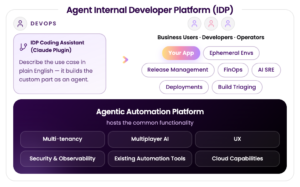
- DuploCloud with AI agents that can action FedRAMP-related tasks (vulnerability scanning, access control, patching) from a Slack message or ticket.
- Shared control plane: Compliance work done by AI agents, reviewed and approved by humans.
- Audit and reporting (SIEM, compliance reports, evidence generation) as a native feature — not just guardrails.
This allows organizations to move faster while maintaining a consistent, audit-ready posture.
As frameworks like FedRAMP evolve, this approach becomes necessary.
FedRAMP 20x: Final Thoughts
These changes to the FedRAMP program with the introduction of FedRAMP 20x represent something much bigger. FedRAMP has always emphasized continuous monitoring, but historically, that hasn’t always translated into truly continuous, system-driven compliance in practice. FedRAMP 20x pushes the model closer to that original intent.
Compliance is no longer treated as a milestone to reach, but as a capability that must be embedded into how systems are designed and operated.
Organizations that succeed in this new model will:
- Embed security and compliance into infrastructure from the start
- Automate control enforcement and evidence generation
- Continuously monitor environments and remediate drift
- Treat compliance as part of the delivery pipeline, not a blocker to it
This is how organizations will scale in a world of increasing regulatory pressure and cloud complexity.
Want to be FedRAMP 20x ready? Get a Demo of DuploCloud: See how automation and AI help you ship faster, stay secure, and scale, without adding headcount.