Most compliance automation tools monitor your infrastructure and document what they find. A smaller number enforce controls at provisioning, so non-compliant configurations can’t be created in the first place. This guide breaks down the 10 best cloud compliance automation tools in 2026, what each one actually does, and how to figure out which model is right for your team.
Compliance used to be a once-a-year event. Schedule the audit. Scramble to pull evidence. Survive the review. Go back to building.
That’s not how it works anymore.
Engineering teams are shipping dozens of times a week. Every deployment touches infrastructure. Every infrastructure change is a potential compliance event — a misconfigured bucket, a missing encryption setting, an overpermissioned service account. By the time a quarterly review catches it, that window has been open for months.
Manual compliance doesn’t scale in the cloud. It never did. The good news: the category of cloud compliance automation tools has matured significantly. The harder part is knowing which type of tool you actually need — because “compliance automation” covers a wide range of architectures, from light GRC dashboards to infrastructure-native enforcement platforms.
This guide covers the 10 best compliance automation tools in 2026, what they do well, who they’re built for, and the four questions to work through before you talk to a single vendor.
What Is Cloud Compliance Automation?
Cloud compliance automation is the practice of using software to continuously monitor infrastructure, enforce regulatory controls, and collect audit evidence — without someone doing it by hand.
The old model: a spreadsheet of controls, periodic configuration checks, a pre-audit scramble. Slow, error-prone, and fundamentally backward-looking. You find out something broke after it’s already been broken.
Modern compliance management software closes that gap in three ways:
1 Continuous monitoring
Controls are checked in real time, not on a schedule. Drift is caught in minutes, not weeks — and your security posture reflects what’s actually running, not what was running last Tuesday.
2 Automated evidence collection
Logs, control states, access records, and policy documentation are collected continuously and organized by framework control. When the auditor asks, it’s already waiting for them.
3 Framework mapping
SOC 2, HIPAA, PCI-DSS, NIST 800-53, ISO 27001, FedRAMP, HITRUST — the platform translates infrastructure configuration into compliance language. Your engineers don’t have to.
Key Features to Look for in Compliance Automation Software
Not all automated compliance tools are built the same. Before evaluating vendors, get clear on which of these capabilities actually matter for your team.
| Feature | Why It Matters |
|---|---|
| Multi-framework coverage | You’ll add frameworks as you grow. Re-implementing on a new platform is expensive. |
| Continuous monitoring | Daily scans leave open windows. Real-time monitoring catches drift in minutes. |
| Automated evidence collection | Pre-audit evidence gathering kills engineering time. Good platforms make it continuous. |
| Infrastructure-level enforcement | Monitoring reports on what was built. Enforcement shapes what gets built. |
| DevOps/IaC integration | Compliance that lives outside the dev workflow gets worked around. It needs to live in the pipeline. |
| Audit-ready reporting | Internal dashboards are not what auditors need. Look for exportable, framework-specific reports. |
| Multi-cloud support | AWS + GCP + Azure is standard. Your platform needs to see all of it. |
The 10 Best Cloud Compliance Automation Tools in 2026
1. Vanta
Vanta is a security and compliance automation platform founded in 2018 by Christina Cacioppo and Erik Goldman, headquartered in San Francisco. It’s one of the most widely adopted names in the category, supporting 35+ frameworks for a large base of SaaS and tech companies.
Best for: SaaS companies going through their first compliance audit
Vanta integrates with your cloud providers, SaaS tools, and identity systems, then monitors continuously for control failures and collects evidence automatically. Onboarding is guided and opinionated — useful for teams without a dedicated compliance function who need clear direction on what to do next.
Strengths
Clean, structured path to SOC 2 and ISO 27001. Extensive integration library across AWS, GCP, Azure, GitHub, Okta, and Google Workspace. Strong for first-audit preparation.
Limitation
Works at the integration layer, not the infrastructure layer. Vanta documents and verifies compliance — it doesn’t enforce it. Your team is still responsible for building compliant configurations.
2. Drata
Drata was founded in 2020 by Adam Markowitz, Daniel Marashlian, and Troy Markowitz, and is headquartered in San Diego. It’s grown into one of the category’s fastest-scaling platforms, serving thousands of customers including Notion and OpenAI.
Best for: Fast-growing startups scaling to multiple compliance frameworks
Similar positioning to Vanta but with stronger workflow automation and more developer-friendly interfaces. Continuous monitoring across 75+ integrations, with remediation guidance rather than just flagging what’s broken.
Strengths
Control mapping lets one piece of evidence satisfy requirements across multiple frameworks. Clean audit dashboard with real-time monitoring. Mature vendor risk management module.
Limitation
Same architectural caveat as Vanta — monitors and documents compliance but doesn’t enforce it at the infrastructure level.
3. Wiz
Wiz was founded in 2020 and is headquartered in New York. It became part of Google Cloud in 2026, one of the largest acquisitions in the cloud security space, and remains a leading name in agentless CNAPP tooling.
Best for: Enterprises with complex cloud security and compliance requirements
A Cloud-Native Application Protection Platform (CNAPP) that covers cloud security posture management, vulnerability management, and compliance as interconnected capabilities. Compliance here is part of a broader security picture, not a standalone product.
Strengths
Agentless architecture with context-aware risk prioritization. Broad framework coverage across CIS, NIST, ISO 27001, PCI-DSS, HIPAA, and GDPR. Surfaces findings as attack paths rather than isolated policy violations — meaningful noise reduction.
Limitation
Priced and built for enterprise security teams with dedicated cloud security functions. Teams primarily looking for compliance automation will find it more than they need.
4. Orca Security
Orca Security was founded in 2019 and is headquartered in Portland, Oregon, with a major hub in Tel Aviv. It pioneered agentless cloud security scanning and remains one of the category’s better-funded players.
Best for: Multi-cloud organizations that need fast compliance coverage
Orca’s agentless SideScanning reads cloud workload data directly from cloud provider storage — no agents needed on each resource. Fast initial deployment, broad multi-cloud visibility across AWS, Azure, and GCP.
Strengths
150+ cloud security and compliance standards out of the box. Automated remediation workflows. Unified compliance view across multi-cloud environments.
Limitation
Developer workflow integration is less mature than infrastructure-native platforms. Remediation is mostly notification-based — better for detection than prevention.
5. Prisma Cloud (Palo Alto Networks)
Prisma Cloud is the cloud security product line of Palo Alto Networks, a publicly traded cybersecurity company (Nasdaq: PANW) founded in 2005 and headquartered in Santa Clara, California.
Best for: Large enterprises with dedicated cloud security teams
One of the most comprehensive cloud security platforms available — covering IaaS, PaaS, containers, serverless, and the full application development lifecycle. Over 1,000 built-in best-practice recommendations with extensive policy customization.
Strengths
Deepest framework coverage and customization in the category. Can enforce compliance policies at multiple points across the dev and deployment lifecycle. Strong for organizations with the resources to implement it properly.
Limitation
Significant implementation complexity, ongoing management overhead, and cost. Teams without dedicated cloud security personnel typically find it underutilized.
6. Scrut Automation
Scrut Automation was founded in 2021 and is headquartered in Bangalore, India. It has grown quickly as an all-in-one GRC and CSPM platform for cloud-native startups.
Best for: Cloud-native startups and SMBs that want GRC and CSPM in one place
Scrut combines GRC capabilities (framework management, evidence, audit workflows) with CSPM (cloud configuration monitoring). Multi-framework templates support SOC 2, ISO 27001, GDPR, and HIPAA simultaneously.
Strengths
Reduces the number of tools in the compliance stack. Hands-on audit support for teams going through complex audits without a compliance officer. Continuous cloud tests mapped directly to framework controls.
Limitation
Interface complexity can trip up non-technical stakeholders — HR and legal teams who need to participate in compliance workflows may struggle to navigate it.
7. Sprinto
Sprinto was founded in 2020 by Girish Redekar and Raghuveer Kancherla, with hubs in Bengaluru and San Francisco. The founders previously built RecruiterBox, which shaped their focus on simplifying compliance for fast-growing companies.
Best for: Startups that need to hit compliance fast
Sprinto is optimized for a single use case: getting to SOC 2 or ISO 27001 as quickly as possible. Guided, opinionated workflows walk teams through implementation in sequence so there’s minimal guesswork.
Strengths
Fastest time-to-first-audit in the category. Reduces decision-making overhead for first-time compliance programs. Good SaaS tool integrations out of the box.
Limitation
Thinner on infrastructure-level security controls and complex frameworks like FedRAMP, HITRUST, and NIST 800-53. A solid starting point — but may not be the platform you scale with.
8. Qualys TotalCloud
Qualys TotalCloud is a product of Qualys, Inc., a publicly traded security company (Nasdaq: QLYS) founded in 1999 and headquartered in Foster City, California.
Best for: Organizations already running Qualys across their security stack
Qualys TotalCloud extends the existing Qualys platform into cloud compliance — continuous posture assessment, policy audits against CIS, NIST, and PCI-DSS, file integrity monitoring, and unified asset management.
Strengths
Strong for existing Qualys customers consolidating their security stack. Audit-grade evidence generation built in. Connects compliance findings to broader vulnerability and risk context.
Limitation
Outside the Qualys ecosystem, the value proposition weakens. The broader platform complexity is overkill for teams primarily looking for compliance automation.
9. Scytale
Scytale was founded by Meiran Galis and is headquartered in Tel Aviv, with a growing presence in New York. It pairs its automation platform with dedicated GRC experts, a model that’s earned it strong customer satisfaction scores.
Best for: Teams that want compliance automation plus access to GRC experts
Scytale pairs a compliance automation platform with a dedicated team of GRC practitioners who help customers implement and manage their programs. Covers SOC 2, GDPR, HIPAA, ISO 27001, and NIST.
Strengths
Interface designed for both technical and non-technical stakeholders. Human GRC expertise alongside automation — useful for organizations without in-house compliance staff. Solid audit-ready reporting.
Limitation
Works at the integration and monitoring layer, not the infrastructure layer. Documents and verifies compliance rather than enforcing it at provisioning.
10. DuploCloud
DuploCloud was founded in 2018 by Venkat Thiruvengadam, a former Microsoft Azure engineer, and is headquartered in San Jose, California.
Best for: DevOps teams that want compliance built into infrastructure, not bolted on afterward
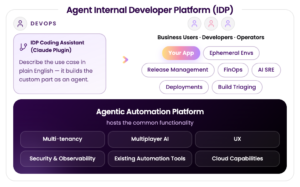
DuploCloud is an AI-powered DevOps platform that treats compliance as a property of infrastructure rather than a separate program running alongside it. Controls for SOC 2, HIPAA, PCI-DSS, NIST 800-53, ISO 27001, HITRUST, and FedRAMP are enforced at the infrastructure layer. Compliant configurations are the default. Non-compliant ones require an explicit override.
That’s a meaningfully different architecture from every other tool on this list.
| Typical Compliance Tool | DuploCloud |
|---|---|
| Monitors what was built | Shapes what gets built |
| Detects drift after it happens | Makes drift structurally harder to produce |
| Collects evidence before audits | Generates evidence continuously |
| Sits outside the DevOps workflow | Is the DevOps workflow |
Key capabilities:
Compliance & Policy Enforcement Agent
Scans for drift continuously and generates real-time, framework-mapped evidence — no manual evidence runs before audits.
Security controls applied at provisioning
JIT access, RBAC, encryption in transit and at rest — all enforced when infrastructure is created, not checked after the fact.
Full audit trails + human-in-the-loop controls
Every agent-driven action is logged. Human approval gates are available before execution for sensitive operations.
Private GPT Agent
Runs entirely within the customer’s cloud perimeter. No data leaves your environment.
Teams using DuploCloud have gone from zero to SOC 2 readiness in days rather than months — because compliant infrastructure is the output of normal operations, not the result of a separate compliance workstream.
One honest caveat: DuploCloud is a full DevOps platform. If you only want a compliance monitoring layer on top of existing infrastructure, it’s broader than you need. If you’re building or re-platforming, it’s the most effective approach in this category.
See how DuploCloud handles compliance automation →
At a Glance: Compliance Automation Platform Comparison
| Tool | Best For | Key Frameworks | Enforcement Level |
|---|---|---|---|
| Vanta | First audit, SaaS | SOC 2, ISO, HIPAA, GDPR, PCI | Integration layer |
| Drata | Fast-growing startups | SOC 2, ISO, HIPAA, PCI, GDPR | Integration layer |
| Wiz | Enterprise security | CIS, NIST, ISO, PCI, GDPR, HIPAA | Agentless CSPM |
| Orca Security | Multi-cloud orgs | 150+ standards | Agentless CSPM |
| Prisma Cloud | Large enterprise | Broad, customizable | Full lifecycle |
| Scrut Automation | Cloud-native SMBs | SOC 2, GDPR, ISO, HIPAA | CSPM + GRC |
| Sprinto | Startups, speed | SOC 2, ISO, GDPR | Integration layer |
| Qualys TotalCloud | Qualys ecosystem | CIS, NIST, PCI-DSS | Posture management |
| Scytale | Automation + expert support | SOC 2, GDPR, HIPAA, ISO, NIST | Integration layer |
| DuploCloud | DevOps-first teams | SOC 2, HIPAA, PCI, NIST, FedRAMP, HITRUST, ISO | Infrastructure layer |
How to Choose the Right Compliance Automation Tool
Work through these four questions before you start talking to vendors.
1 What frameworks do you need — now and in 18 months?
Don’t optimize only for what you need today. FedRAMP, HITRUST, and NIST 800-53 are supported by fewer platforms than SOC 2 and ISO 27001. Verify native support before you commit, or you’ll be re-evaluating vendors in 12 months.
2 Where do you want compliance to live in your stack?
Monitoring model: a GRC tool connects to existing infrastructure, observes, and documents.
Enforcement model: controls are embedded at provisioning and compliant infrastructure is the output. Neither is universally better — it depends on your starting point. Teams re-platforming benefit significantly more from the enforcement model.
3 Who will actually operate this platform day-to-day?
Engineering-first teams: DuploCloud, Wiz, Orca.
GRC/security teams: Vanta, Drata, Scytale.
Startups without compliance staff: Vanta, Drata, Sprinto.
Large enterprise security orgs: Prisma Cloud, Wiz.
4 How automated is the automation, really?
Ask vendors directly before signing anything. What percentage of evidence is collected without manual uploads? Is drift detection alert-only, or does it trigger automated remediation? What does the evidence package actually look like when it reaches an auditor?
Where These Tools Focus and What Sits Beyond
All tools above do a legitimate job, but they share a structural limitation worth naming plainly: they observe and document compliance state. They don’t enforce it at the infrastructure layer.
Here’s what that means in practice. Your GRC tool is connected via API. Your cloud infrastructure is being built by engineering teams. There’s a lag between when something gets built and when it gets checked, between when a misconfiguration appears and when it gets flagged, and between when it gets flagged and when it gets remediated. That lag is your exposure window. And in a team shipping dozens of times a week, it can be substantial.
The way to close that gap isn’t a better GRC tool. It’s embedding compliance controls at the layer where infrastructure is provisioned, so compliant configurations are the default output, and non-compliant ones require an explicit override.
DuploCloud takes compliance beyond the GRC layer and into the infrastructure itself. Rather than connecting to existing infrastructure to observe and document it, DuploCloud enforces controls at the point of provisioning, so compliant configurations are the default output of your DevOps workflow.
The result: teams using DuploCloud have gone from zero to SOC 2 readiness in days rather than months, not because they ran a compliance sprint, but because compliant infrastructure is the output of normal operations.
Importantly, DuploCloud isn’t a replacement for the GRC tools above. It’s what makes them more effective. The evidence DuploCloud generates continuously feeds directly into Vanta, Drata, or whichever GRC platform you’re using for auditor-facing workflows. You get infrastructure-layer enforcement plus the GRC tooling your auditors actually want to see.
Final Thoughts
The right compliance automation tool comes down to one question: do you want compliance to be something you monitor, or something you produce?
Most tools on this list are excellent at monitoring. They document what’s there and make audit prep less painful. For a lot of teams, that’s exactly what’s needed — and tools like Vanta, Drata, and Scrut do it well.
For engineering teams building in the cloud who want compliance to be a structural property of their infrastructure — not a separate program running alongside it — infrastructure-native enforcement closes the gap entirely. There’s no lag between building and being compliant, because they’re the same thing.
FAQs
What’s the difference between a compliance automation platform and a GRC tool?
GRC tools manage compliance workflows — evidence organization, control tracking, audit reporting. Most operate at the integration layer, meaning they observe and document what your infrastructure is doing. Compliance automation platforms, particularly infrastructure-native ones like DuploCloud, enforce controls at provisioning. The real distinction is documenting compliance versus structurally producing it.
Do I need a separate compliance tool if I already have a DevOps platform like DuploCloud?
Not necessarily. Platforms that enforce compliance at the infrastructure layer generate continuous evidence, monitor for drift, and map controls to frameworks as part of normal operations. A separate GRC tool may still make sense for vendor risk management or cross-functional audit workflows — but the core compliance automation is already covered.
Can these tools replace a human compliance team?
No — but they dramatically reduce the manual workload. Evidence collection, drift detection, and control monitoring get automated, which frees your team to focus on policy decisions and auditor relationships rather than data gathering. Think of it as removing the grunt work, not the judgment.
How long does SOC 2 take with a compliance automation tool?
With GRC and monitoring tools, typically weeks — assuming your infrastructure is reasonably well-configured to start. With infrastructure-native platforms like DuploCloud, often days, because compliant infrastructure is the default output rather than something you retrofit.
Between audits, is continuous compliance actually enforced or just monitored?
Depends entirely on the tool. Most GRC platforms monitor between audits — they flag when something falls out of compliance but rely on your team to fix it. Infrastructure-native platforms enforce controls at provisioning, so compliant configurations are the default and drift is structurally harder to produce. When evaluating vendors, ask specifically: is the enforcement preventive or detective?
How do these tools handle multi-framework compliance without duplicating work?
The best platforms use unified control mapping — a single piece of evidence or infrastructure control satisfies requirements across multiple frameworks at once. Drata and Vanta do this well at the GRC layer. DuploCloud does it at the infrastructure layer: the same provisioning process generates evidence for SOC 2, HIPAA, and PCI-DSS simultaneously, with no separate workflows required.